

Smart Infrastructure Is Proven on Eventful Days


The 2026 Winter Olympics are already underway across northern Italy, bringing heightened mobility demand, concentrated pedestrian activity, and cross-city travel flows. As the Games approach their conclusion, attention turns to Verona, host of the Olympic Closing Ceremony at the historic Arena di Verona.

For Verona, this is more than a ceremonial moment. It is a real-world test of how urban infrastructure performs under peak complexity.
Unlike purpose-built Olympic parks, the Arena di Verona is embedded within an active city center. Roads remain operational. Residents continue commuting. Commercial transport does not pause. On closing day, the city must absorb international visitors, media fleets, temporary security measures, and increased pedestrian density — all while maintaining normal urban movement.
This is not simply “more traffic.” It is different traffic.
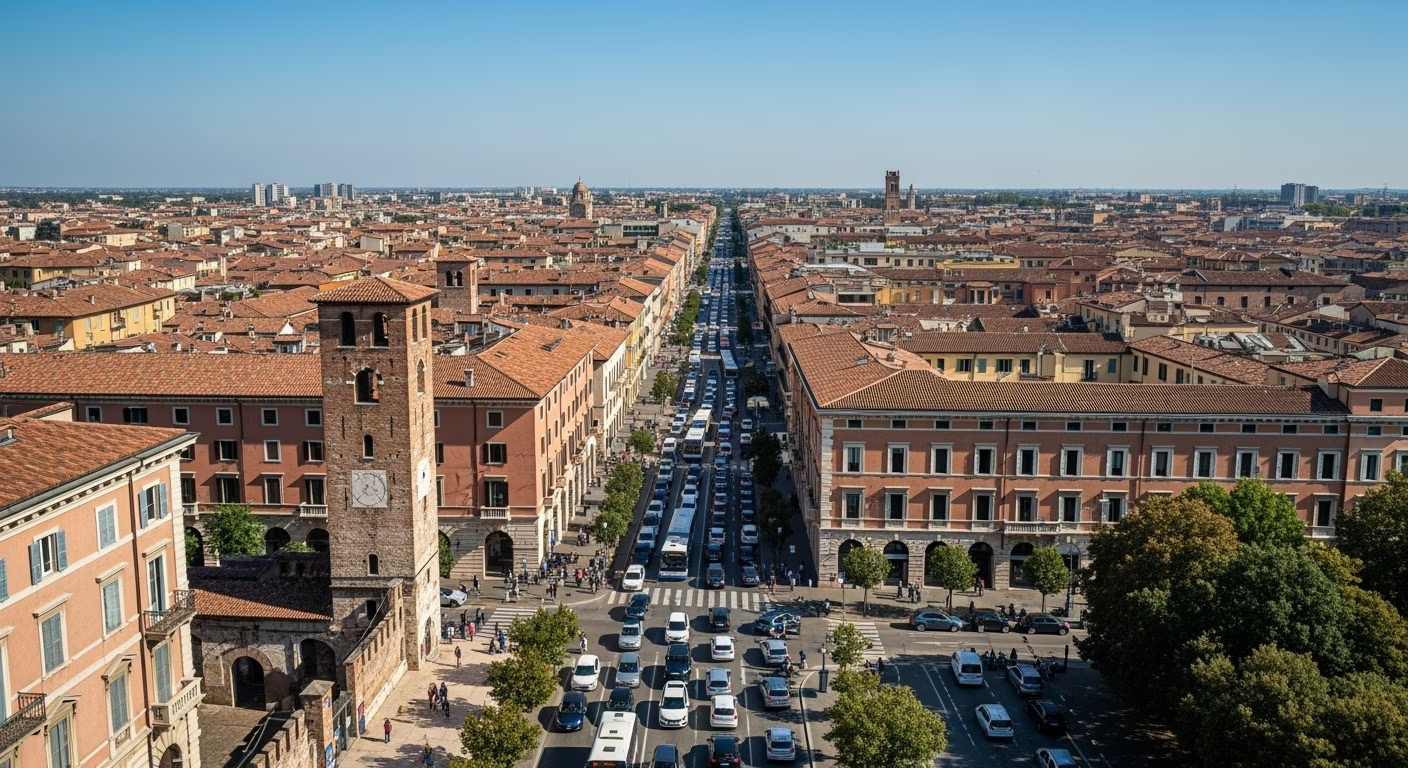
Large-scale ceremonies alter mobility behavior in ways that differ significantly from standard weekday conditions. In Verona’s case, the Closing Ceremony introduces dynamics such as:
- concentrated visitor inflows from intercity corridors
- temporary road restrictions and rerouted traffic
- increased pedestrian density in mixed-traffic zones
- clustered bus and shuttle operations
- irregular stopping, pickup, and drop-off behavior
- compressed peak demand within narrow time windows.
Systems optimized around historical averages may perform adequately under stable flows, but event-driven variability exposes their limits. Density spikes, directional shifts, and unpredictable vehicle behavior can challenge detection continuity and increase reliance on manual oversight.
Eventful days are not exceptions. They are stress tests.
Infrastructure That Operates Beyond “Event Mode”
In many cities, large events trigger temporary operational strategies — modified signal plans, additional monitoring, or short-term equipment deployment. While useful, these approaches can fragment data continuity and increase operational burden.
Resilient infrastructure must operate differently. It must maintain consistent performance across both ordinary days and high-impact events, without requiring structural reconfiguration.
This is where systems like bitsensing’s traffic monitoring platform play a role.

In Verona, sensing infrastructure is designed to operate continuously, not only during high-visibility moments. Through radar-based detection combined with camera integration and edge processing, the system captures real-time mobility conditions regardless of traffic variability. Rather than relying on external recalibration during demand spikes, detection is maintained across fluctuating volumes, irregular vehicle behavior, and changing flow directions.
This approach allows city operators to monitor conditions during the Closing Ceremony using the same infrastructure that supports everyday operations. Data from event days remains directly comparable to data from routine periods. There is no segmentation between “normal” and “special” modes.
Consistency becomes the foundation for insight.
From Visibility to Measurable Performance
The Closing Ceremony at the Arena di Verona is a globally visible event, but its operational significance lies in what it reveals.
When sensing systems maintain accuracy during peak demand, cities gain more than situational awareness. They gain measurable performance data. Stable detection enables:
- reliable post-event traffic analysis
- accurate congestion and queue-length measurement
- informed signal optimization
- environmental impact assessment
- coordinated decision-making across departments
Without continuity, event days become isolated data points. With continuity, they become validation moments.
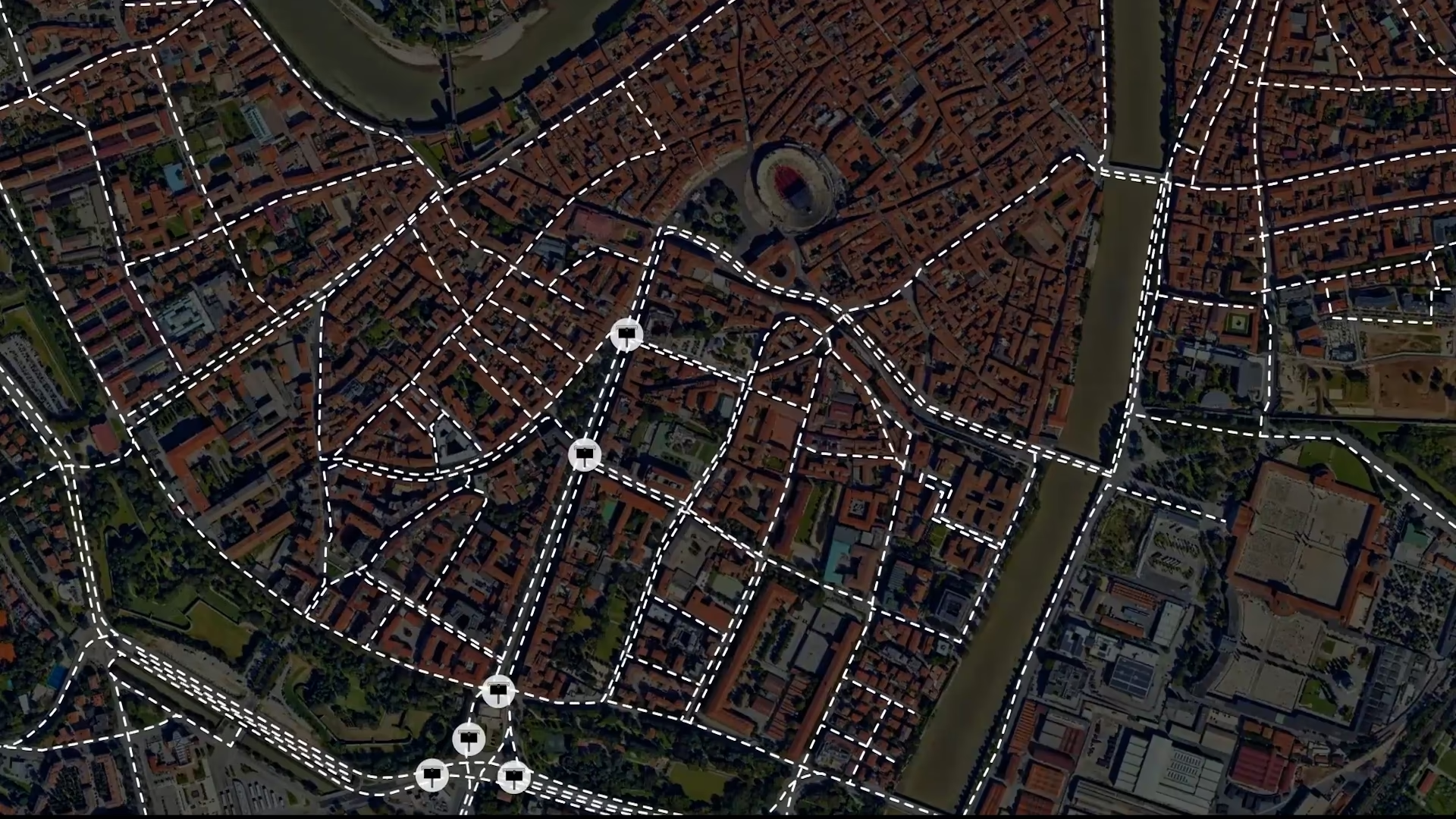
The ability to transition seamlessly from peak ceremony conditions back to routine operations is equally important. Once the Olympic flame is extinguished, Verona’s roads do not reset. Commuters return. Commercial traffic resumes. Tourism continues. Infrastructure must support this transition without recalibration delays or data gaps.
A Broader Lesson for Smart Cities
The Closing Ceremony of the 2026 Winter Olympics represents a concentrated example of a broader urban reality. Cities increasingly experience fluctuations driven by tourism, construction, weather, public gatherings, and seasonal shifts. These recurring variations mirror the dynamics of large-scale international events.
Infrastructure that performs reliably during a global ceremony is inherently better positioned to manage everyday variability.
Smart infrastructure, therefore, is not defined by how advanced it appears under ideal conditions. It is defined by how dependably it operates when complexity intensifies — when flows shift, density increases, and operational expectations are highest.
Normal days establish baseline functionality.
Eventful days prove resilience.
As Verona hosts the final ceremony of the Games, the city demonstrates that the true measure of smart infrastructure is not performance under predictability, but stability under pressure.

bitsensing | Radar Reimagined