

South Korea’s Super-Aging Society and the Role of Smart Sensing in the National Care Response


It happened quietly, but the numbers don’t lie.
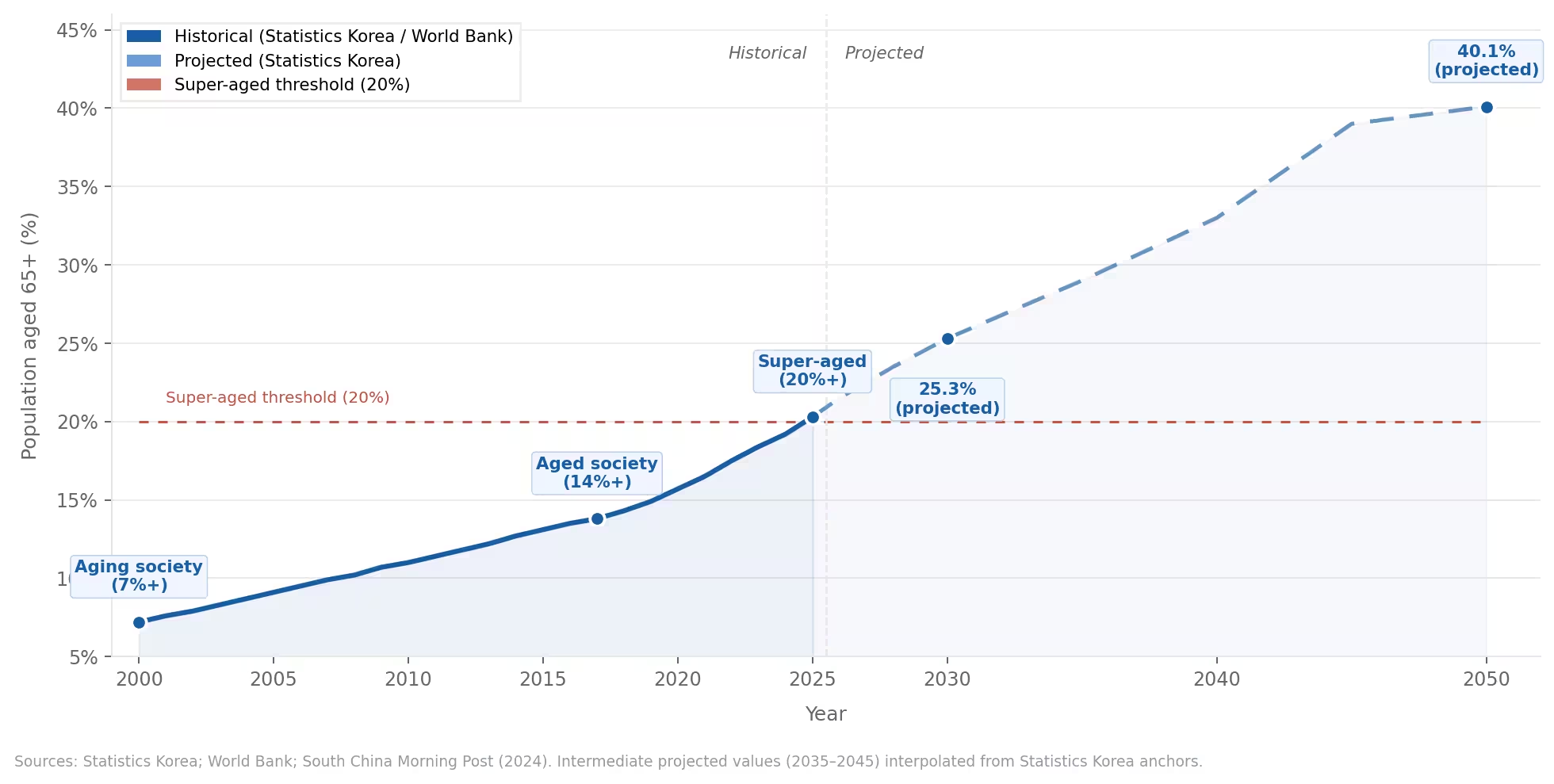
In 2024, South Korea officially crossed a threshold that demographers had long been tracking: more than 20% of its population became aged 65 or older. By the close of 2025, that figure had climbed to 21.21% — roughly 10.84 million people out of a total population of 51 million.[1]
One in five Koreans is now a senior citizen.
This is not just a demographic milestone. It is a national inflection point — one that is already reshaping how Korea thinks about healthcare, housing, labor, and technology.
What Is a Super-Aged Society?
A super-aged society is defined by the United Nations as a country where more than 20% of the population is aged 65 or older.
South Korea crossed this threshold in 2024 — making it one of the fastest countries in history to reach this classification. It took Korea just 7 years to move from “aged society” (14% elderly) to “super-aged” status, a transition that took most European countries several decades.[2]
Korea's Record-Breaking Demographic Shift
South Korea’s demographic transformation has been one of the fastest in recorded history. Among OECD countries, Korea has the highest rate of population aging.
Two forces are driving this:
A collapsing birth rate. In 2023, a mere 230,000 children were born in Korea — almost one-third of the level two decades ago.[3] The result is a shrinking base of young people entering the population.
Rising life expectancy. South Korea’s average life expectancy at birth is 83.3 years, ranked 4th globally. More people are living longer, but many are doing so with chronic conditions that require ongoing care.
The trajectory ahead is stark:
- Elderly population rate forecast to exceed 30% by 2036[4]
- Forecast to reach 40% by 2050
- Old-age dependency ratio expected to rise from 29.3 in 2025 to 77.3 by 2050
That last number matters most. By 2050, there will be fewer than 2 working-age Koreans for every elderly person requiring support.
A Care System Outpaced by Demand
South Korea has a national Long-Term Care Insurance (LTCI) program in place since 2008. But the pace of aging is outrunning the infrastructure built to support it.
The staffing crisis is severe. In 2023, Korea faced a shortage of 190,000 nursing staff. That gap is expected to grow to 1.55 million by 2032. [5]
Funding is running out. The national long-term care insurance fund is projected to be exhausted by 2030 if current trends continue.
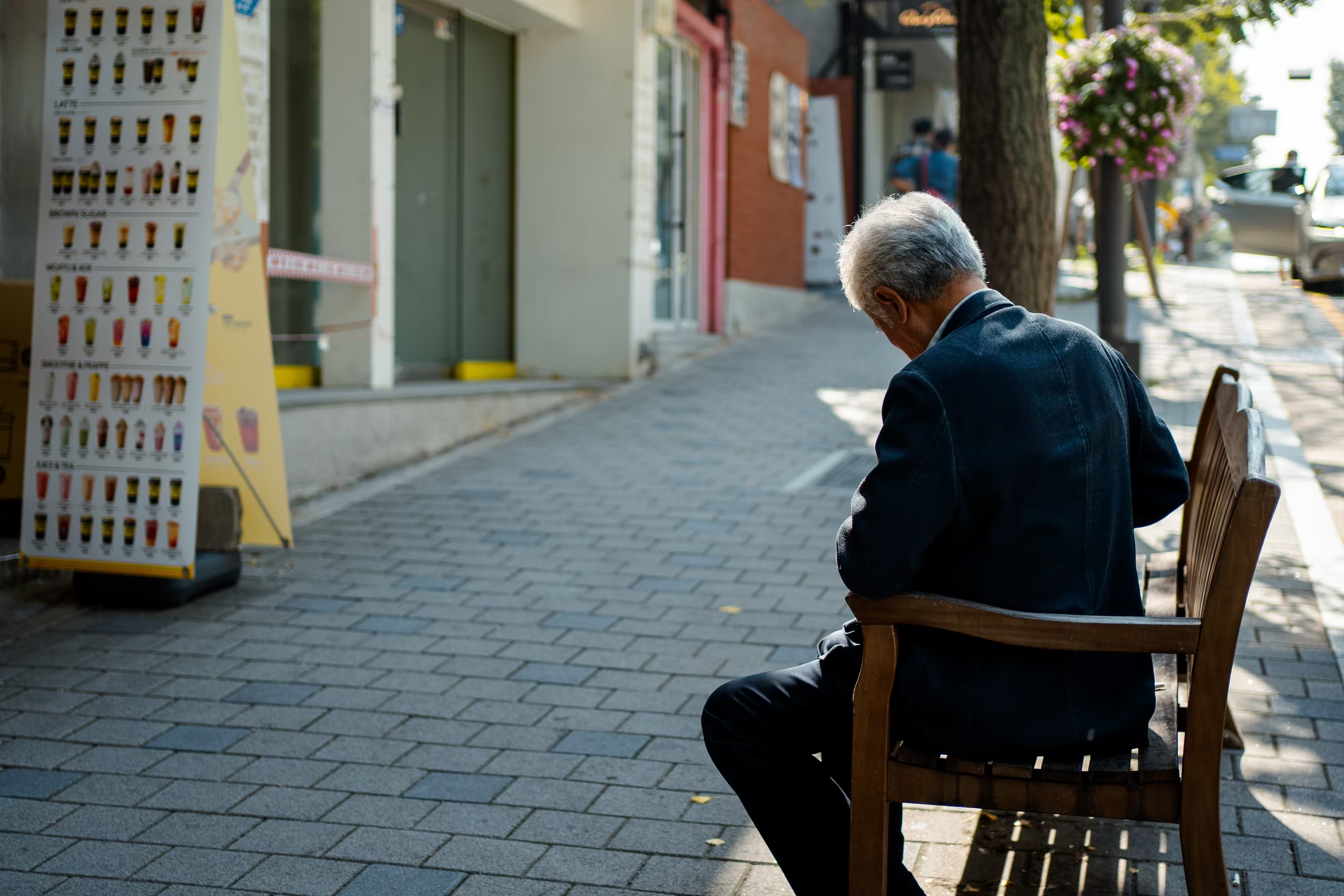
Elderly people are increasingly living alone. In 2025, over 2.21 million Koreans aged 70 and above lived alone — representing 21.6% of all single-person households in the country.[6] These individuals face elevated risks of sudden health events, abnormal activity patterns, and social isolation, often with no one nearby to notice.
The government has responded with urgency. The Ministry of Health and Welfare has implemented AI-IoT-based home care services for seniors.[7] Seoul’s Metropolitan Government has deployed companion robots and smart monitoring devices. Plans are underway to expand home-based primary care centers to 250 locations by 2027.[8]
These are meaningful steps. But the gap between the scale of need and human-driven care capacity alone remains significant.
Why Is Technology Essential for Elderly Care at Scale?
For decades, elder care monitoring assumed physical presence: a nurse visiting the home, a family member checking in, a care worker doing rounds.
That model doesn’t scale when there aren’t enough caregivers to go around.
Technology must step in — not to replace caregivers, but to extend their reach. To give one nurse visibility into dozens of patients simultaneously. To alert families when something changes before it becomes an emergency. And to do all of this without intruding on the dignity and independence of the person being cared for.
This is where contactless radar sensing becomes critical.
What Is Contactless Radar Monitoring for Healthcare?
Contactless radar monitoring is a technology that uses radio waves to detect a person’s breathing, movement, and heart rate — without any physical contact, wearable device, or camera.
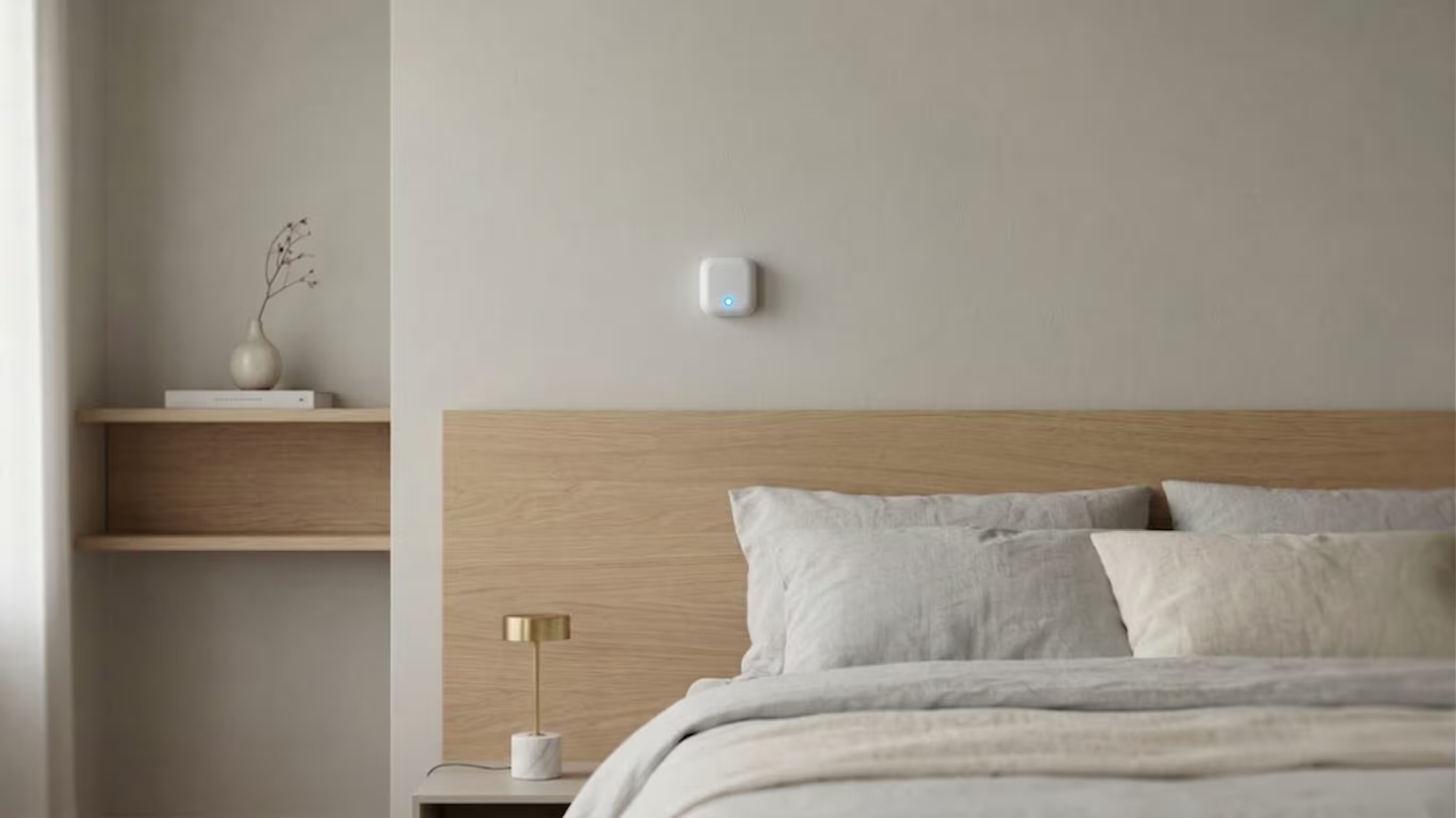
A compact radar sensor is installed in a room. It continuously tracks bio-signals through the air, in any lighting condition, regardless of clothing or position. The person being monitored doesn’t need to do anything — the sensor works passively, around the clock.
Data is transmitted to caregiver dashboards or healthcare platforms in real time, allowing remote monitoring of patients, elderly residents, or individuals living alone.
How Does Radar Compare to Other Elderly Monitoring Technologies?
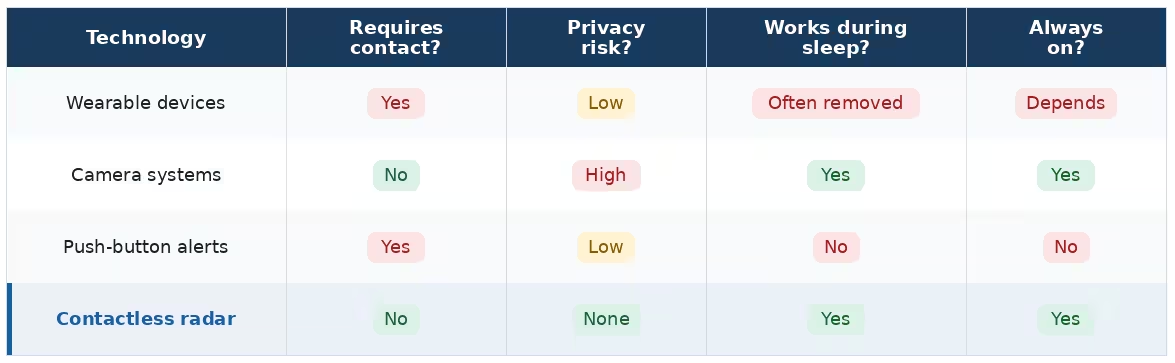
Wearable devices only work when worn. Many elderly users remove them at night or during bathing — the exact moments when risks are highest.
Camera systems raise serious privacy concerns in bedrooms and bathrooms, making them unsuitable for many home environments.
Push-button alerts require the person to be conscious and able to reach the device.
Radar sidesteps all of these limitations. It requires no behavior change, no charging, and no active participation from the user. Continuous, always-on monitoring means changes in breathing, movement patterns, or vital signs can surface early — reaching caregivers and families before a situation becomes a crisis.
Where Radar Fits in Korea’s Care Ecosystem
Korea’s government is already investing in AI and IoT-based care tools. The AI-IoT Healthcare Project for Senior Citizens, implemented by the Korea Health Promotion Institute, has demonstrated positive outcomes in frailty prevention and healthy lifestyle support for older adults.
Radar sensing fits naturally into this policy direction.
It can be embedded into existing home environments — near a bed, in a living area — without requiring renovation or behavioral change. It integrates with healthcare platforms and caregiver dashboards, feeding real-time data into the systems providers are already building. And because it operates without a camera, it aligns with the privacy expectations of users in sensitive living spaces.
For technology companies, care platform providers, and government partners, this represents a genuine convergence: a public health need of national scale, a policy environment actively seeking solutions, and a sensing technology ready to deploy today.
Looking Ahead
South Korea’s super-aging challenge is not unique — Japan, Germany, Italy, and much of East Asia face similar trajectories. The scale of the need is global, and so is the urgency to find solutions that work at scale.
Radar is uniquely positioned to meet that moment. Unlike wearables that depend on user compliance, or cameras that trade privacy for visibility, radar simply works — continuously, silently, without asking anything of the person it monitors. It is, in the truest sense, ambient care.
At bitsensing, this is the future we are building toward. Our radar solutions are designed not just to collect data, but to provide reliable, continuous insight that makes a real difference in how elderly individuals are cared for — whether at home, in a care facility, or anywhere in between.
As populations age and care systems strain under the pressure, the role of intelligent, privacy-first sensing will only grow. We believe radar is the technology that makes that future possible.
FAQ
Q: What is a super-aged society?
A super-aged society is a country where more than 20% of the population is aged 65 or older, according to the United Nations classification. South Korea crossed this threshold in 2024.
Q: When did South Korea become a super-aged society?
South Korea officially became a super-aged society in 2024. By the end of 2025, 21.21% of its population — approximately 10.84 million people — were aged 65 or older.
Q: What is the nursing staff shortage in South Korea?
South Korea had a shortage of 190,000 nursing staff in 2023. That gap is projected to grow to 1.55 million by 2032, creating an urgent need for technology-assisted care solutions.
Q: How does radar technology help elderly people living alone?
Contactless radar sensors monitor breathing, movement, and heart rate passively and continuously, without requiring the user to wear a device or take any action. Changes in vital signs or activity patterns are flagged to caregivers or family members in real time.
Q: Why is radar better than cameras or wearables for elderly care?
Radar requires no physical contact and uses no camera, eliminating both the compliance problem of wearables and the privacy concerns of camera-based systems. It works continuously in any lighting condition, making it uniquely suited for overnight and at-home monitoring.
Q: What does bitsensing offer for healthcare monitoring?
bitsensing develops contactless radar solutions for healthcare environments, including sleep monitoring and patient activity tracking. Our technology provides privacy-first, always-on sensing for individuals at home, in care facilities, and in hospital settings.
Reference