

Physical AI Needs to Understand Motion, Not Just Objects

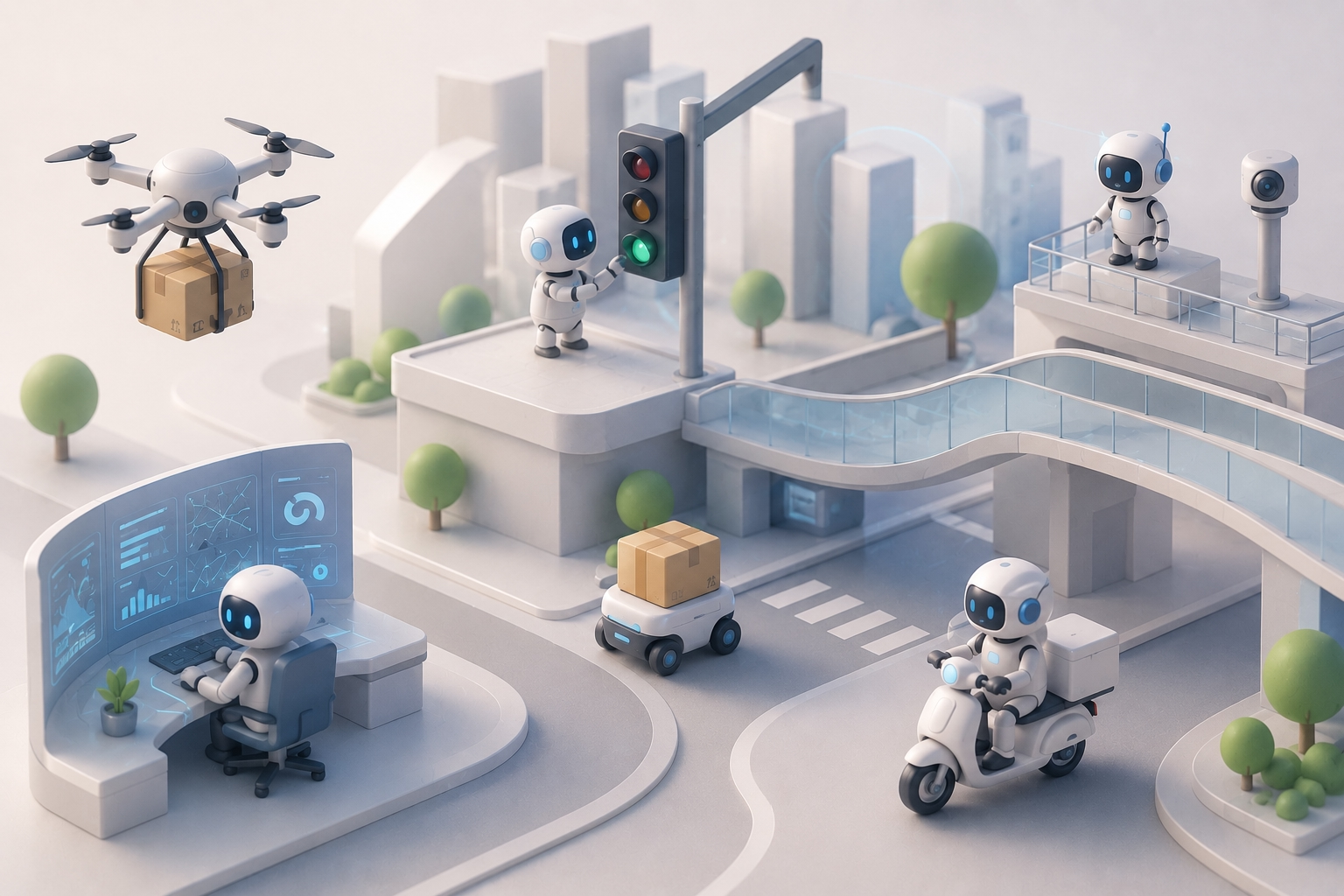
AI has become remarkably good at recognizing the world. The next challenge is teaching it to understand how the world moves.
For a decade, the artificial intelligence race was about identification. Modern perception models can isolate a pedestrian, categorize a cyclist, and map a lane line with incredible precision. These breakthroughs brought autonomous driving and advanced robotics out of the lab and onto the street.
But identifying an object is not the same as understanding its behavior.
Today’s autonomous systems are facing a massive paradigm shift. It is no longer enough to know what exists in an environment; systems must grasp how that environment is changing in real time. They must anticipate intent, predict trajectories, and make split-second decisions in chaotic, living worlds.
This requirement is driving the industry's massive pivot toward Physical AI—systems built not just to look, but to interact.
From Seeing to Predicting
Humans don’t navigate the world by analyzing static snapshots. We read motion.
When we see a child running toward a curb, a cyclist overtaking us from a blind spot, or brake lights flashing three cars ahead, we aren’t just identifying shapes. We are instantly calculating velocity, direction, and intent. That predictive layer shapes exactly how we react.
For autonomous systems, this predictive capability is a matter of safety.
Physical AI cannot treat the world as a sequence of isolated frames. It must continuously interpret the shifting fluid dynamics between vehicles, pedestrians, and infrastructure. True understanding is ultimately about prediction—knowing not just where an object is right now, but exactly where it will be one second from now.
Why Radar Measures What Cameras Guess
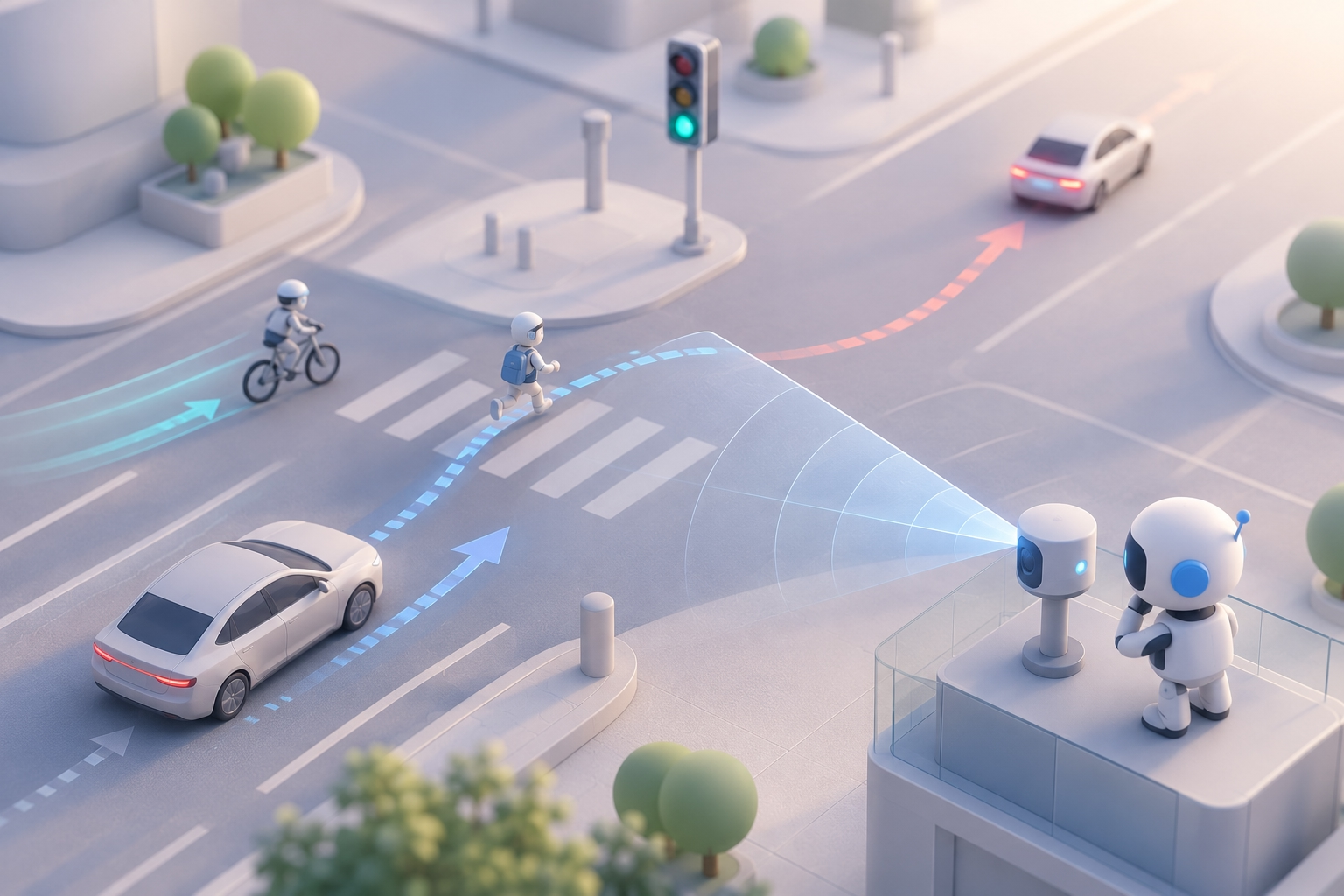
Many perception architectures have traditionally relied on visual information. Cameras provide stunning semantic detail, making them excellent at classifying objects. But a camera cannot directly measure motion.
To determine speed or direction, a camera-reliant AI must infer it by calculating the differences between sequential frames. Toss in darkness, blinding glare, heavy rain, or fog, and that mathematical inference becomes incredibly complex—and risky.
Radar operates on a fundamentally different layer of physics.
By utilizing the Doppler effect, radar directly measures an object’s precise velocity at the speed of light, while simultaneously calculating its exact range and direction. Radar doesn’t infer motion; it observes it. It gives Physical AI models an unassailable baseline of ground-truth data, functioning flawlessly in the exact environmental extremes that blind vision-based systems.
For Physical AI, motion isn't supplementary telemetry. It is foundational.
The New Architecture of Autonomy
The industry's rapid migration toward Physical AI reflects a broader realization: object recognition has hit a ceiling.
NVIDIA has brought the concept into the mainstream, framing Physical AI as the bridge allowing intelligence to move from digital data centers into machines that act in the physical world. Concurrently, autonomous pioneers like Wayve and Waabi are deploying end-to-end architectures and multi-modal "world models"—AI systems explicitly designed to predict how a physical environment will evolve seconds into the future.
While their software approaches differ, their data requirements are converging. The next generation of AI cannot rely on dumbed-down, pre-processed object lists. Advanced generative networks and occupancy grids require high-fidelity, first-class physical inputs—depth, velocity, and spatial flow—to make safe, real-time decisions.
Better AI Demands Better Sensor Streams
As neural networks grow more sophisticated, the old way of filtering sensor data is becoming obsolete.
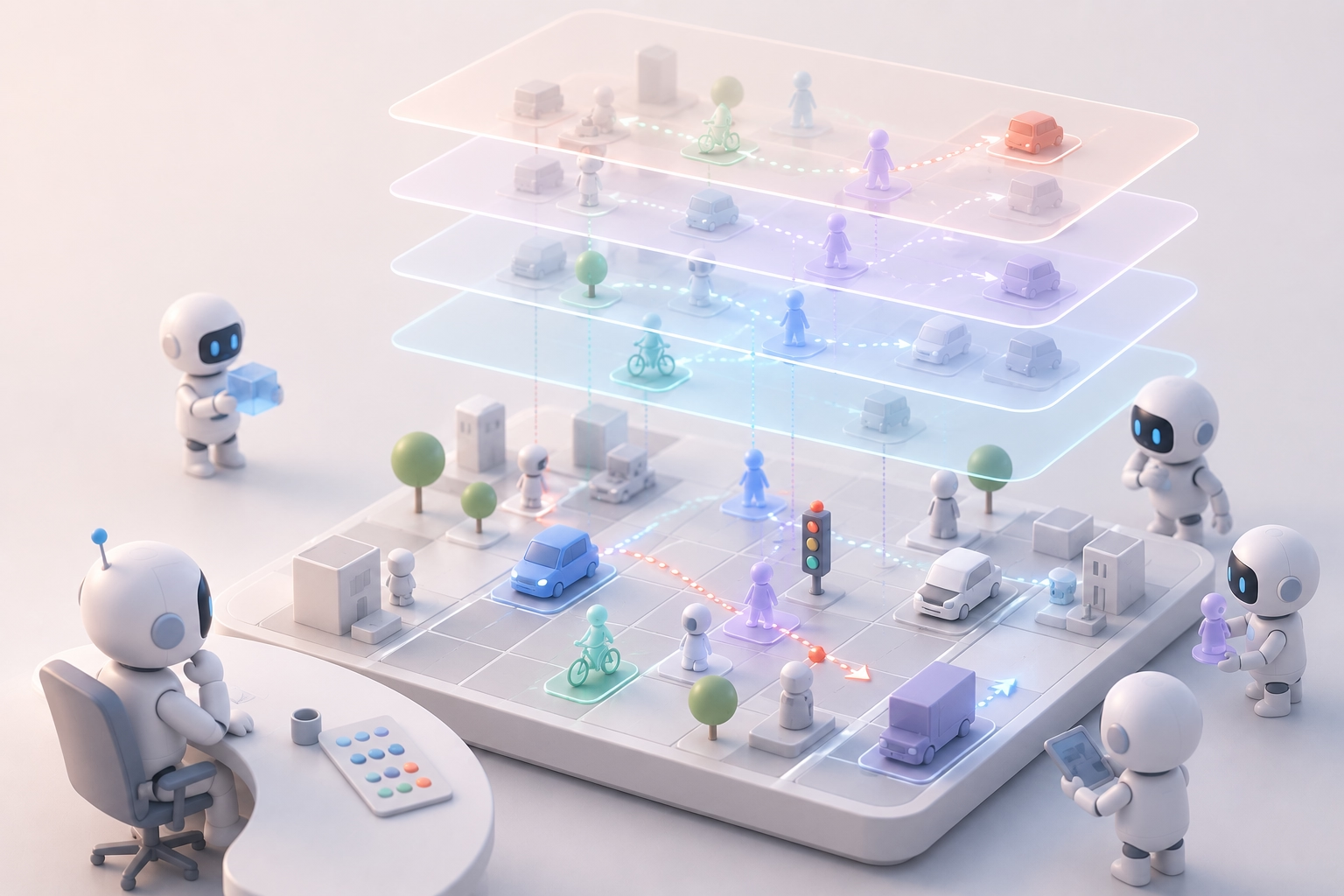
Instead of receiving a simplified, post-processed list of "detected objects," AI developers are demanding raw, uncompromised sensor outputs. They want dense point clouds, precise Doppler measurements, and raw radar data. They need the rich, underlying physics of the environment so the AI models can learn directly from real-world observations.
At bitsensing, this exact philosophy drives our development of next-generation imaging radar. Our AIR4D system is engineered specifically for this era of Physical AI, delivering high-resolution data streams and direct Doppler access that modern AI architectures need for training, validation, and real-world deployment.
The next breakthrough in autonomy won't come from seeing more objects. It will come from understanding how the world moves. And understanding begins with motion.